

05.
Staying with gas?

AUTHOR: Stephen Lowndes
Technical Lead at Carbon and Energy Fund
Decarbonisation of natural gas at point of use
A perceived advantage of hydrogen as an alternative to natural gas, is that it can be combusted in a similar manner using familiar boiler technology, or even used in existing plant that has been retro-adapted. Most importantly, hydrogen contains no carbon and so no CO2 is released during its combustion. The issue remains though, of how we generate hydrogen in the first place. There are currently three main routes to produce hydrogen, these being electrolysis, steam methane reformation (SMR) and methane pyrolysis.

NHS Trusts with unlikely recourse to hydrogen or geothermal energy that may be candidates for decarbonization of gas at the point of use.
Methane pyrolysis currently appears to be the technology that may be scalable down to site use level and is a solution being considered for application at industrial sites and potentially hospitals too. The process splits the carbon from natural gas through an exothermic reaction derived from a heat source and a controlled pyrolysis process. In the absence of oxygen, this process produces a substance commonly referred to as ‘carbon black’, alongside the required hydrogen fuel output. Carbon black is essentially a dry powder or granular product that can then be removed from site and subsequently used as a raw material as part of the manufacture of other products, such as building materials. Clearly a chain of custody is needed to ensure the end product is not then ultimately combusted at the end of its life and the previously captured carbon released to atmosphere.
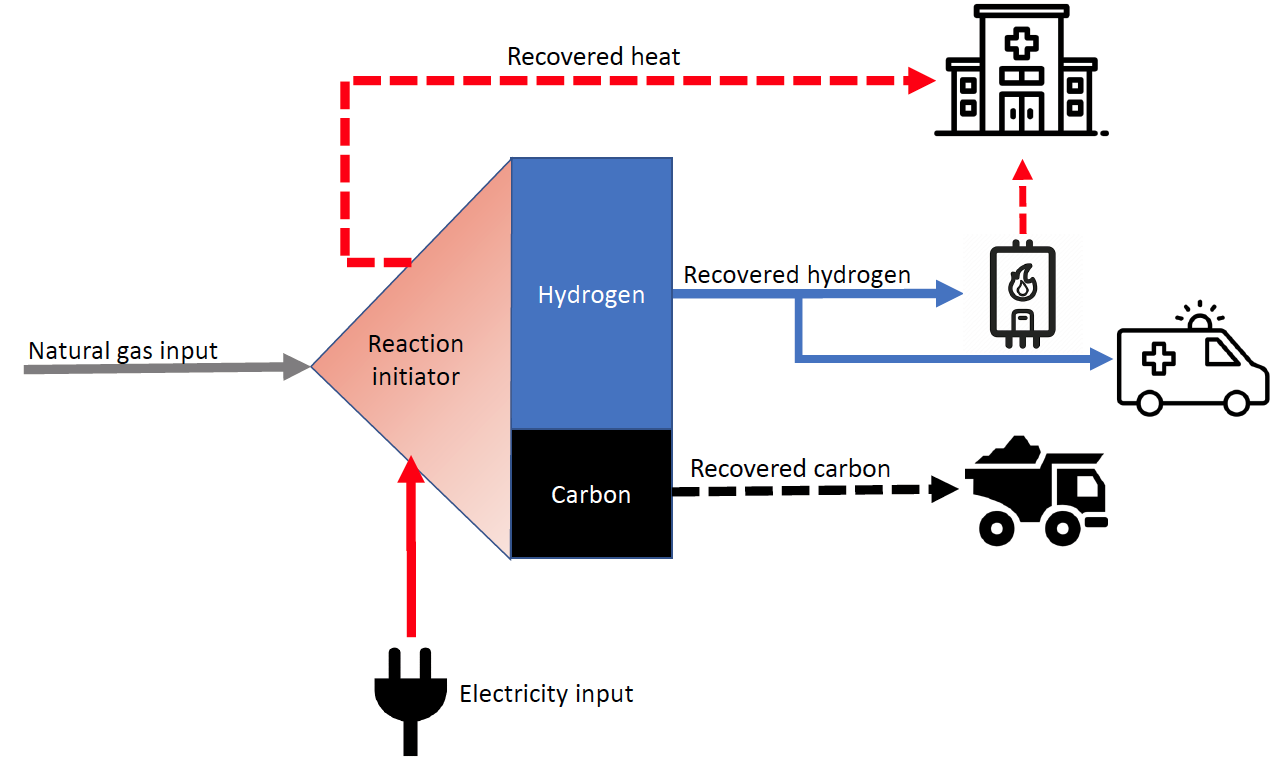
H2 at point of use
Currently, small-scale on-site methane ‘pyrolysis’ systems are being developed for market that use either microwave or electric plasma technology to act as a reaction initiator, enabling the process of stripping carbon from methane to occur at comparatively lower temperatures and pressures than might otherwise be needed for traditional pyrolysis.
The key to the success of small-scale methane to hydrogen generation systems will be achieving a realistic capital cost, and the ability to operate efficiently and economically at the same time as not taking up unrealistically large areas of a hospital site. Current small-scale hydrogen production systems are in their initial proving and pilot stages and it is expected that these technologies will develop rapidly in the coming years.
In all cases electricity input is needed for the energy source driving the microwave or plasma reaction process. This will usually be derived from the national grid, so net carbon sequestered from the natural gas input must also take into account electricity grid emissions incurred.
Initial pilot plants currently being developed for onsite locations take up shipping container sized modules and the number of modules required depends upon the through put of natural gas and hydrogen generation delivered. In addition to the plant space, a suitable area is required for the storage of the carbon black grains, which would need to be regularly collected from site, and so a vehicular access route is also needed.
Business case
To date, comparisons to conventional heat production look promising, both in terms of carbon sequestering and potential running costs. Initial investigations show the potential for on-site hydrogen production to deliver CO2 emissions to air rates that are much lower (around 40% lower) than current best alternatives using electric heat pumps for equivalent heat delivery.
Work has also started on determining the financial model, which compares small scale hydrogen production with operating natural gas boilers or electric heat pumps. It is likely that the overall cost of running such systems will need a revenue stream for the carbon black produced in order to achieve parity with the cost of operating natural gas boilers. The potential for achieving this appears promising from work undertaken in conjunction with potential suppliers so far.
Other uses by the NHS
Consideration for generating hydrogen for NHS vehicle fuel application is also being considered, such as ambulance fleets, that may cover many thousands of miles per year and need to be available 24/7, placing a degree of challenge when considering their wholesale electrification, which needs managing within limitations of charging down time and range. Early studies to date indicate the potential for significant carbon and fuel cost savings compared with existing diesel and current electric vehicle alternatives. Other areas for investigation include pyrolysis of medical waste and strategic utilization in co-generation of heat and power.
Conclusions
The financial and technical business case is still being developed for small scale point of use hydrogen production. As such, it remains to be seen as to whether the technology has a definite viability and a place within the hospital setting, whether for decarbonizing heat, vehicle fleets or other strategic uses. However, the potential for delivering this technology looks promising and it may well turn out to be the right answer for some sites and Trusts that find themselves with limited alternative options because of their location or limitations of local electricity networks.
About the author
Stephen Lowndes BEng (Hons) MSc CEng MCIBSE MEI, has many years’ experience of energy project design, as well as supporting operational management including carbon and energy management within the public sector that started with NHS projects in the 1980s. Stephen leads the Carbon and Energy Fund technical delivery team, working on all aspects of project feasibility through to construction and operational delivery.